15th Sunday in Ordinary Time - Year A - What Kind Of Soil Is In Your Heart & “If Anyone Has Ears”
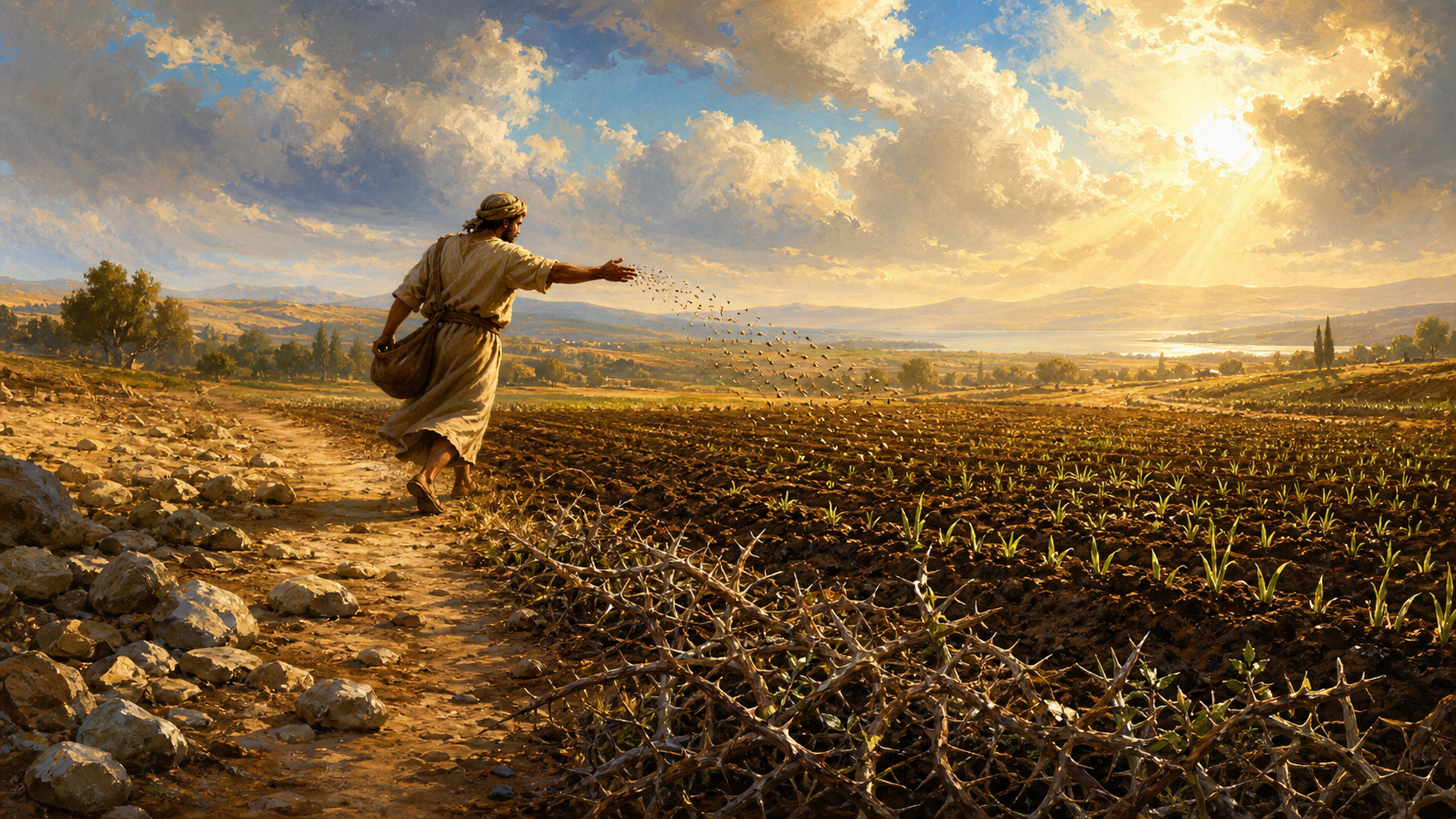
One of Jesus' most loved parables is the Parable of the Sower. A farmer scatters seed generously. Some falls on the path, some on rocky ground, some among thorns, and some on rich soil. Then, in a beautiful moment, Jesus explains exactly what the parable means.
The seed is the Word of God. The sower is God Himself, who never tires of sowing His love into every human heart. The real question is not whether God is speaking. He always is. The question is: What kind of soil are we?
Notice how generously the sower scatters the seed. He does not reserve it only for fertile ground. As St. John Chrysostom observed, God never gives up on anyone. He continues to sow, hoping that every heart will one day become fruitful.
Jesus invites us to examine the condition of our own hearts.
Perhaps at times we are like the hardened path. Disappointments, hurts, resentment, or pride can make us resistant to God's voice. We hear His Word, but it never penetrates our hearts.
Sometimes we are rocky ground. We are inspired by a retreat, a moving homily, or a moment of prayer, but when life becomes difficult, our enthusiasm quickly fades because our faith has not yet grown deep roots.
For many of us, the greatest challenge is the thorns. Jesus identifies them clearly: "the cares of the world and the lure of wealth." Today's thorns include endless busyness, financial worries, constant distractions and the digital noise that fills every quiet moment. None of these things are evil in themselves, but they can slowly choke our relationship with God until His Word no longer bears fruit.
Then there is the good soil: a heart that is open, humble, and willing to be transformed. Good soil is not perfect soil. It is soil that has been broken open by God's grace. It listens, receives, and allows the Word to change the way we live. The wonderful news is that we are not condemned to remain the same. Unlike ordinary soil, our hearts can be transformed.
Repentance softens hardened hearts. Prayer deepens shallow faith. Simplicity uproots the thorns that suffocate our spiritual life. As St. Augustine reminds us, God's Word has the power to change even the hardest heart … if we allow it.
But Jesus calls us to do more than receive the seed. He asks us to become sowers ourselves. Every act of kindness, every word of encouragement, every gesture of forgiveness is a seed planted in someone else's life. Like God, we are called to sow generously without deciding in advance who is worthy of our love.
This week, remember that God is continually knocking at the door of your heart. He comes through Scripture, the Eucharist, the people you meet, the quiet voice of conscience, and even the unexpected events of daily life. The question is not whether He is speaking. The question is whether we are listening.
As you approach the Eucharist this weekend, ask yourself:
What kind of soil is my heart like today?
What thorns are choking God's life within me?
What hardness needs to be softened?
Where has God been speaking to me, and have I been listening?
May we become the rich soil that receives God's Word with joy and bears fruit; not just for ourselves, but for everyone we encounter.
___________________________________________________
In honor of this weekend’s Gospel, we would like share our latest video.
"If Anyone Has Ears" by Marty Haugen is a musical invitation into the heart of the Parable of the Sower, as Jesus calls us to be good soil: to hear His Word deeply, receive it with an open heart, and bear fruit thirty, sixty, and a hundredfold.
Paired with this Sunday’s readings around Isaiah's assurance that God's Word will not return empty and Paul's vision of all creation groaning toward redemption, may this song stir in you the desire to be soil that is deep, receptive, and richly fruitful for the Kingdom.
Video can be watched by clicking here or by clicking on the thumbnail below.